
Identity Theft Awareness Week: 7 Smart Ways Credit Union Members Can Protect Their Identity
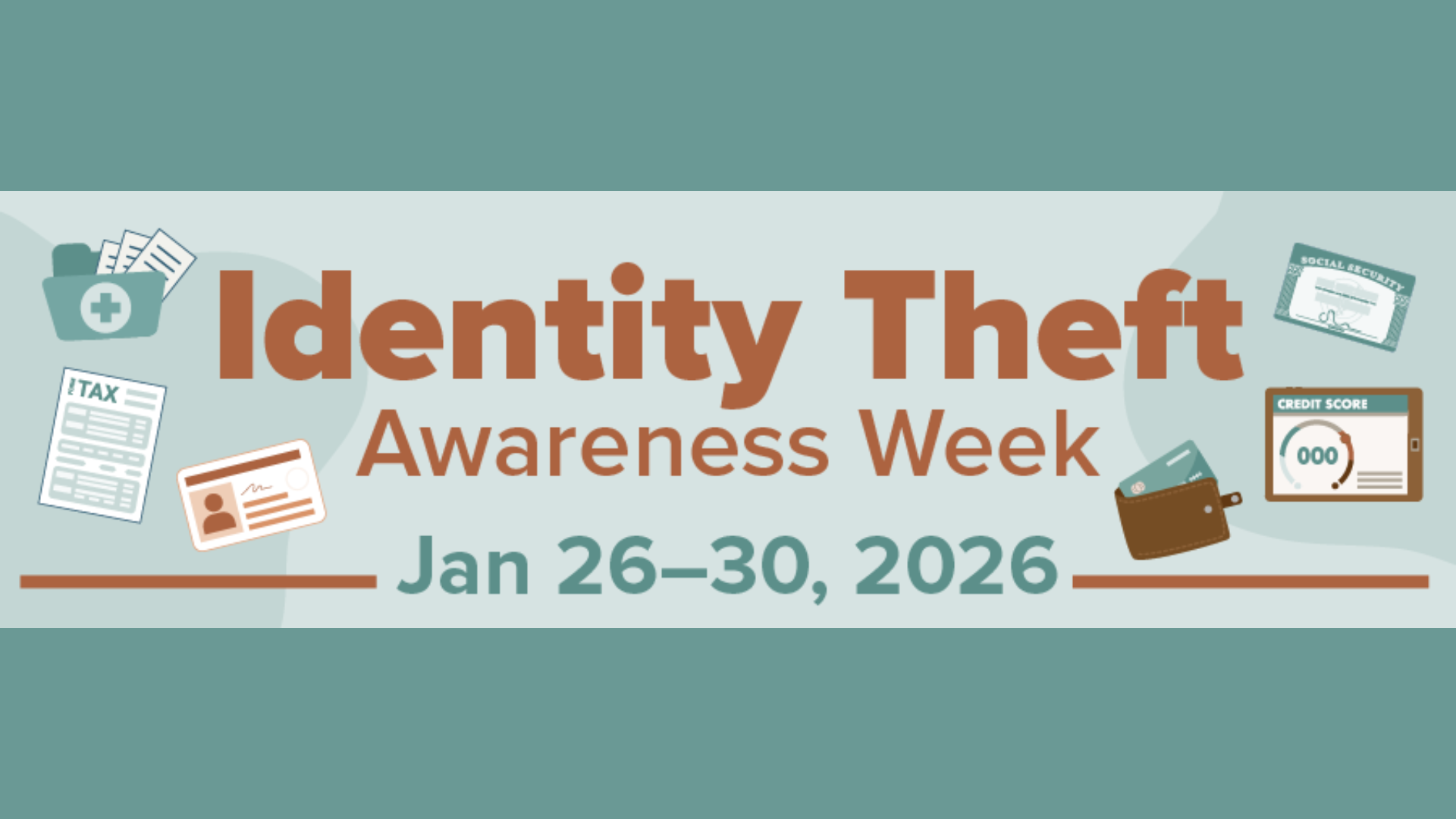
Identity Theft Awareness Week runs January 26–30, 2026, and if there’s one takeaway worth remembering, it’s this: protecting your identity is protecting your money. As a credit union member, you already have strong safeguards working behind the scenes, but identity theft prevention works best when members and their financial institution work together.
Here are seven practical tips every credit union member should use to help keep their identity and accounts secure.
1. Treat Your Personal Information Like Cash
If you wouldn’t hand someone your wallet, don’t hand over your personal info. Social Security numbers, account numbers, and online banking credentials should only be shared when you initiate contact and trust the source. Scammers often pretend to be financial institutions, retailers, or even government agencies to create urgency. When in doubt, stop and verify.
2. Use Strong, Unique Passwords Everywhere
Yes, it’s annoying. Yes, it matters. Your online banking password should be unique and complex, not reused from social media or shopping sites. A password manager (like Bitwarden) can help you create and store secure passwords without having to remember them all. Bonus points for enabling multi-factor authentication whenever possible.
3. Monitor Your Accounts Regularly
Credit unions offer robust monitoring tools, but members still play a key role. Check your account activity often using online or mobile banking. Even small, unfamiliar transactions can be a red flag. Reporting suspicious activity early helps stop fraud before it spreads to other accounts.
4. Be Cautious With Emails, Texts, and Calls
Phishing attempts are getting more convincing by the day. Emails or texts that ask you to click a link, confirm information, or “fix” a problem should raise immediate suspicion. Credit unions will never ask for sensitive information through unsolicited messages. When unsure, contact your credit union directly using a trusted phone number or website. (You can call FFCU at 800-332-0779)
5. Protect Your Devices
Your phone, tablet, and computer are gateways to your financial life. Keep devices updated with the latest security patches, use antivirus software, and lock screens with strong passcodes or biometrics. Avoid logging into financial accounts on public Wi-Fi networks whenever possible.
6. Know the Safeguards Your Credit Union Provides
FFCU and other credit unions invest heavily in fraud detection, account monitoring, and security controls to protect members. Understanding what protections are already in place helps you spot when something feels off. If you ever have questions or concerns, your credit union is a partner, not a call center maze.
7. Educate Yourself and Stay Informed
Identity theft prevention isn’t a one-time lesson. Scams evolve constantly, which is why ongoing education matters. Visit ff-cu.org/fraud-prevention-tips for helpful articles and resources designed specifically for members. You can also learn more during Identity Theft Awareness Week at ftc.gov/IDTheftWeek, where the Federal Trade Commission shares tools, events, and recovery guidance.
The bottom line: staying proactive is the best defense. When members stay informed and engaged, and credit unions provide strong safeguards, identity thieves have a much harder time getting anywhere.